
You've spent good money on quality display cases. The last thing you want is to arrive at a trade show, exhibition, or pop-up event and find a cracked panel, a scratched surface, or a snapped hinge. Acrylic is a robust material, but it isn't indestructible, and the chaos of event setup is where most damage happens.
Whether you're transporting lockable display boxes, sports memorabilia cases, or full acrylic pedestals, the way you pack and handle them before and during the event matters just as much as the products inside them.
Why Acrylic Needs Specific Handling
Acrylic scratches more readily than glass, and it can crack under point pressure if packed incorrectly. What makes it so effective as a display material (its optical clarity, its clean finish) is also what makes it unforgiving when it comes into contact with rough surfaces, sharp edges, or poorly stacked loads.
The most common causes of transport damage are straightforward: inadequate wrapping, loose items shifting in transit, stacking heavy boxes on top of lighter ones, and rushing through the loading and unloading process at the venue. None of these are difficult to prevent with a bit of planning.
Wrapping and Padding: The Basics Done Right
Use foam or bubble wrap, not newspaper. Newspaper ink transfers onto acrylic surfaces and can be surprisingly difficult to remove. Bubble wrap is fine for short-distance transport, but for anything involving significant movement or vibration, closed-cell foam sheeting is the better choice. It doesn't compress as quickly and provides more consistent protection across a flat panel.
Wrap every piece individually. Don't let two acrylic surfaces touch each other in transit, even if both are wrapped. The friction between two wrapped panels can still cause micro-scratches. Separate each item completely.
Keep the protective film on for as long as possible. If your display cases were supplied with a protective film on the acrylic surfaces, resist the temptation to remove it until you're at the venue and ready to set up. That film is there specifically to protect against surface damage during handling.
Packing Cases and Containers
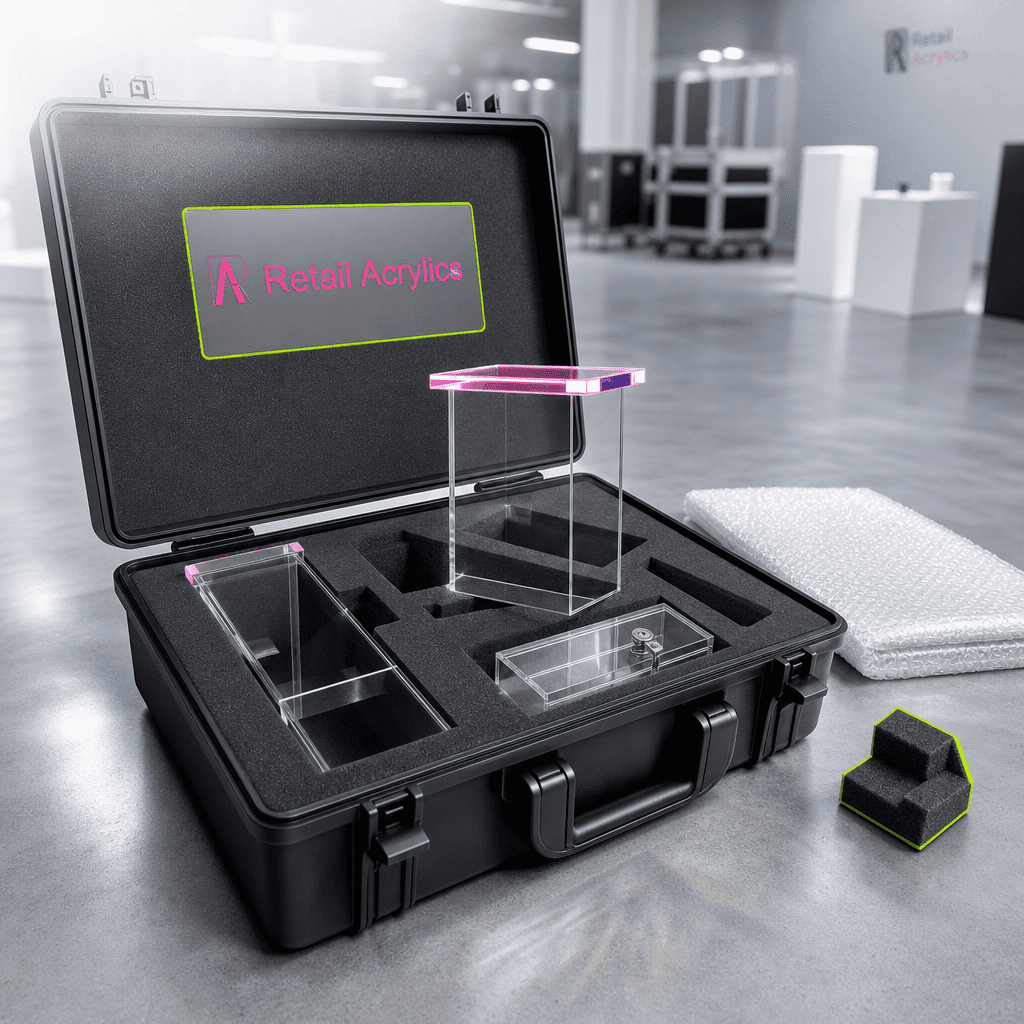
If you're doing events regularly, investing in purpose-built flight cases or foam-lined storage boxes pays for itself quickly. Custom-cut foam inserts that hold each display case securely mean nothing moves, nothing rattles, and nothing gets scratched.
For businesses transporting acrylic pedestals (particularly taller units in the 90cm to 120cm range), it's worth considering a custom transport sleeve or a padded bag. These larger items are awkward to pack in standard boxes, and their height makes them vulnerable to tipping or being dropped during loading.
Label your boxes clearly. Mark which side is up, and indicate if a box contains fragile items. This sounds obvious, but when you're loading a van at speed or handing items over to venue staff, clear labelling prevents a lot of careless handling.
At the Venue: Setup Without the Rush
Event setup is where most preventable damage actually occurs. You're in an unfamiliar space, often under time pressure, working with temporary surfaces and awkward layouts.
Set up your display area before you unpack your cases. Know exactly where each item is going before you remove it from its packaging. This reduces the amount of time acrylic is exposed on a hard floor or a trestle table edge.
Use a clean cloth or mat as your unpacking surface. A folded exhibition table cover works well. Placing acrylic directly onto a concrete floor or a rough wooden table while you sort out your display layout is asking for surface damage.
Check your display cases for damage before you fill them. Once a case is filled with products, you're less likely to notice a scratch or a chip, and you'll have no way of knowing whether it happened in transit or at the venue. A quick visual check before loading them with stock gives you a clear baseline.
Lockable Cases: Worth the Extra Care
Lockable display boxes deserve particular attention during transport. The locking mechanism is a point of vulnerability; if a case is jolted or dropped, the lock housing can crack, which compromises the function of the case as well as its appearance.
Pack lockable cases so that no pressure is applied to the lock area. This typically means packing them upright rather than on their sides, and ensuring the surrounding padding is firm enough to prevent any movement.
Bringing It All Together
The same principles apply whether you're transporting a single acrylic display box to a local market or loading a full set of pedestals, display cases, and product stands into a van for a regional trade exhibition. Individual wrapping, proper containment, careful handling during setup, and a quick inspection on arrival will cover the vast majority of transport risks.
If you're planning an upcoming event and want display solutions that are built to last, our full range of acrylic display cases, pedestals, and lockable boxes is manufactured in the UK, held in stock, and available with free delivery on orders over £150. We also offer express delivery if your event is coming up fast. Browse the full range at retailacrylics.co.uk or get in touch with us directly at hello@retailacrylics.co.uk to talk through what you need.