
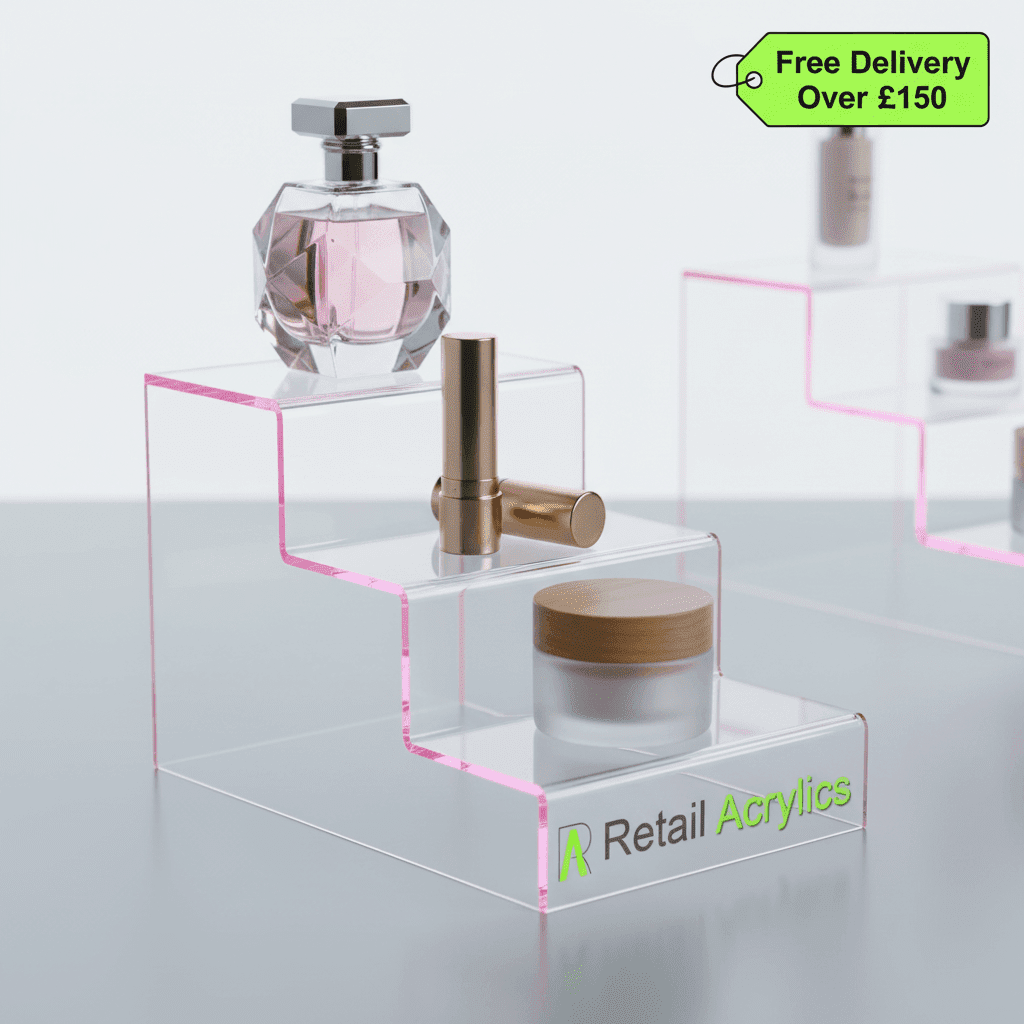
Walk into any well-merchandised retail space and your eye instinctively moves across the display rather than stopping at a single point. That's not an accident. It's the result of deliberate visual layering, and display steps are one of the most straightforward tools for achieving it. Whether you're arranging products in a shop window, setting up a trade stand, or organising a counter display in an office reception, a tiered layout changes how people engage with what you're showing them.
Here's a practical look at how display steps work, where they add the most value, and how to get the best results from them.
What Display Steps Actually Do
A flat surface limits you. Everything sits at the same height, which means items at the back get obscured by items at the front. Customers or visitors have to lean in, move things around, or simply miss products entirely.
Display steps solve this by creating depth and elevation. Each tier lifts items progressively, so everything remains visible at a glance. This works particularly well when you have a range of similar-sized products, a collection you want to present as a complete set, or a mix of items where visual hierarchy matters.
The effect is clean, professional, and it signals that care has gone into the presentation. That impression carries weight in retail and commercial environments.
Where Tiered Displays Work Best
The applications are broader than many people expect. A few of the most common and effective uses include:
Retail counter displays. Cosmetics, accessories, small electronics, and packaged goods all benefit from stepped presentation. Customers can see the full range without rearranging anything, which reduces handling and keeps the display looking tidy throughout the day.
Trade shows and exhibitions. Space is limited and competition for attention is high. A tiered acrylic display lets you pack more products into a compact footprint while still presenting each one clearly. Combined with consistent branding or signage, a stepped display can anchor your stand visually.
Reception and office environments. Product samples, literature, branded items, and awards all need somewhere to live. Steps and bridges allow you to create an organised, layered arrangement that looks considered rather than cluttered.
Showcasing collections. If you're displaying sports memorabilia, collectibles, or any curated set of items, steps help communicate that these objects belong together while giving each one its own space.
Choosing the Right Material
Acrylic is the go-to choice for display steps, and for good reason. It's lightweight, durable, and the clarity of clear acrylic means it doesn't compete visually with the products sitting on it. The display itself recedes, and the items take centre stage.
Clear acrylic steps work particularly well with products that have strong colour or branding, because there's no visual noise from the display unit itself. If you want the structure to contribute to the overall aesthetic, coloured acrylic steps can complement a brand palette or interior scheme.
For commercial use, the material needs to be robust enough to handle repeated use, cleaning, and the occasional knock without yellowing or cracking. UK-manufactured acrylic products tend to hold up well under these conditions, and knowing the provenance of what you're buying matters when you're relying on it day to day.
Getting the Layout Right
The physical structure is only part of the result. How you arrange products across the tiers makes a significant difference to how the display reads.
A few principles that tend to work consistently:
Lead with your strongest item. Place your hero product, best seller, or most visually striking piece at eye level or on the highest tier. It anchors the display and draws the initial glance.
Create a natural flow. Think about how the eye moves across the display. A diagonal line from top-left to bottom-right tends to feel natural for most viewers. Arranging products to guide that movement keeps people engaged longer.
Group by logic, not just aesthetics. Similar products together, complementary items adjacent to each other. A display that makes product relationships obvious helps customers make connections and often increases the likelihood of multiple purchases.
Leave breathing room. Overcrowding undermines the tiered effect. Each tier should have enough space around each item for it to read as an individual piece. If products are touching or overlapping, the display starts to look like a stockroom shelf rather than a showcase.
Keep height proportions in check. Very tall items on lower tiers can block the view of items behind them, which defeats the purpose of stepped display. Generally, taller items sit best on higher tiers, with smaller items in front.
Combining Steps With Other Display Elements
Steps work well on their own, but they become more versatile when combined with other display formats. Pairing a stepped unit with display cases or lockable boxes allows you to present high-value or fragile items securely at different heights. Adding a pedestal or plinth beside a stepped counter display creates a focal point for a single standout piece while the steps handle the broader range.
For events or window displays, combining steps with acrylic cubes and boxes at varying heights extends the layering effect beyond the step unit itself, giving you more flexibility in how you fill a space.
Practical Considerations Before You Buy
A few things worth confirming before you order display steps for commercial use:
Check that the step dimensions are actually suited to the products you're displaying. Width and depth per tier matter as much as height. A step that's too shallow for your products is not much use.
Consider whether you need a fixed unit or something that can be reconfigured. Some display environments change frequently, and flexibility in how you arrange the tiers can save time and money in the long run.
Think about delivery and storage. If you're ordering multiple units or outfitting a larger space, free delivery thresholds and stock availability make a practical difference to cost and planning.
If you're setting up a tiered display and want to see the full range of acrylic steps, bridges, and complementary display products available, visit our product pages at Retail Acrylics for options manufactured here in the UK, with no minimum order and free delivery on orders over £150.