
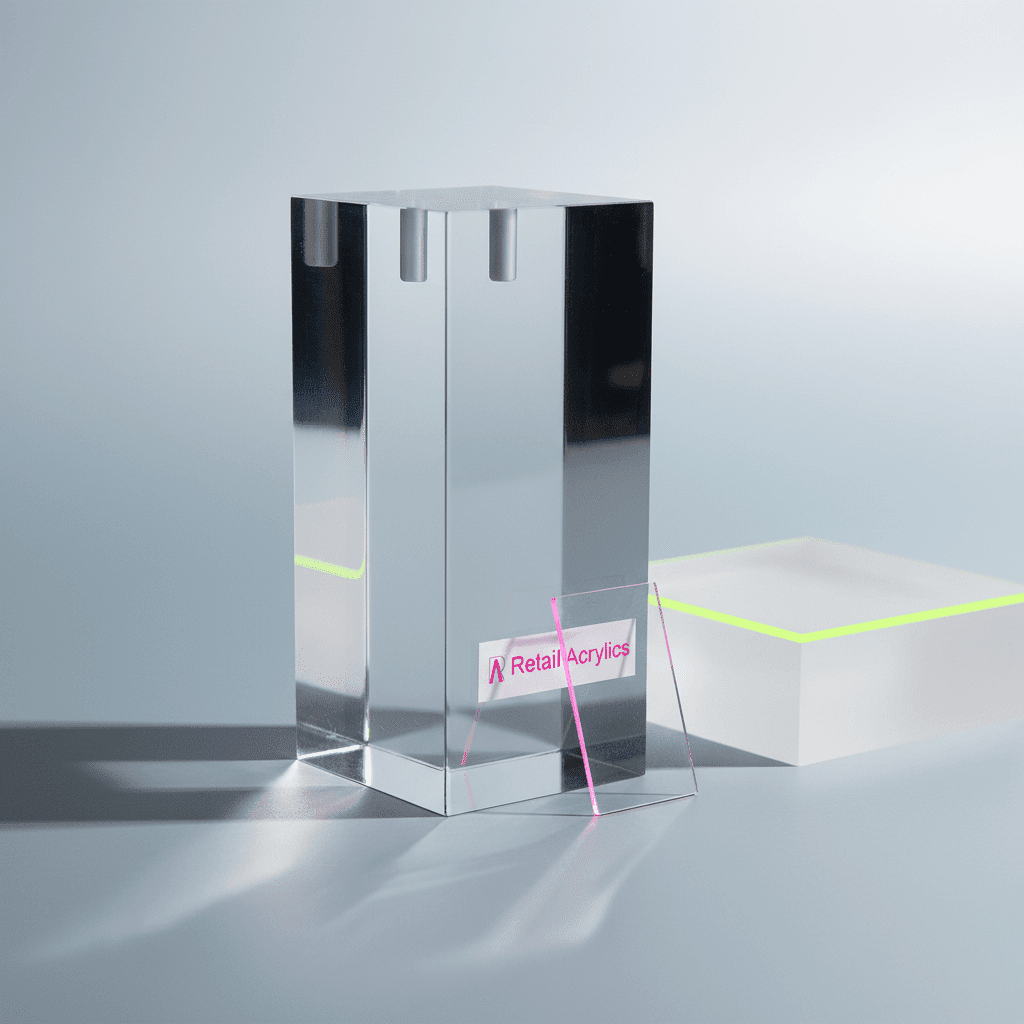
Choosing the wrong display solution can undermine even the most carefully curated product range. Whether you're setting up a retail environment, preparing for an exhibition, or simply want to present items with more impact, the decision between a plinth and a pedestal matters more than most people realise. The two terms are often used interchangeably, but they do carry distinct meanings, and understanding the difference helps you make a smarter purchasing decision.
What Is a Plinth?
A plinth is, at its most basic, a flat platform or base designed to support an object. Architecturally speaking, a plinth is the lowest element of a structure, the foundation upon which something else rests. In display terms, it tends to be a low-profile, solid block or platform that elevates a product just enough to separate it visually from its surroundings.
Plinths work particularly well for heavy or oversized items where height is less important than a stable, grounded base. Think sculptures, large retail products, or branded installations where you want the object to feel rooted and substantial. The low centre of gravity makes plinths a practical choice in environments with high footfall, where taller structures might pose stability concerns.
What Is a Pedestal?
A pedestal takes the concept further. Where a plinth is wide and low, a pedestal is typically a taller, more slender column-style structure designed to bring a product up to eye level or close to it. The word itself comes from the Italian "piedistallo," meaning "foot of a stall," and that heritage still rings true today. A pedestal literally puts your product on a stage.
Pedestals are the go-to choice when visibility and presentation are the priority. In retail, museum, and event settings, displaying a product at chest or eye height draws attention naturally. It removes the need for customers or visitors to crouch down or strain to see detail. For smaller, high-value items like jewellery, electronics, memorabilia, or luxury goods, raising the product on a pedestal creates an immediate sense of prestige and importance.
Our acrylic pedestals are available in heights ranging from 30cm to 120cm, giving you genuine flexibility depending on whether you need a modest lift or a full eye-level feature display. They come in a range of colours too, so matching your brand aesthetic is straightforward rather than an afterthought.
The Practical Differences Side by Side
Understanding the theory is one thing; knowing how these differences translate in practice is where the real value lies.
Height and visibility: Pedestals bring products up to a comfortable viewing height. Plinths keep things grounded. If your display needs to catch the eye from across a room, a taller pedestal is almost always the better option.
Surface area: Plinths typically offer a broader base, which is useful for displaying items that need physical support across a wider footprint. Pedestals concentrate the support in a smaller column, making them better suited to compact, self-contained items.
Visual weight: A low, wide plinth creates a feeling of solidity and permanence. A tall, narrow pedestal creates a sense of elegance and elevation. Neither is inherently better; it depends entirely on the product and the message you want to send.
Stability: For particularly tall or top-heavy items, a plinth's lower profile reduces the risk of tipping. Pedestals are well suited to lighter products where height is the goal and structural demands are lower.
When to Use Each One
There is no universal answer here, and that is actually useful to know. It means both formats have a legitimate place in a well-planned display strategy.
Choose a plinth when:
- Your product is large, heavy, or structurally complex
- You want a clean, architectural look that anchors the display
- The item is being displayed at waist height and doesn't need further lifting
- You're working in a high-traffic environment where stability is a priority
Choose a pedestal when:
- You're showcasing smaller, high-value items that benefit from elevation
- You need to draw attention from a distance
- The display is for a premium retail setting, exhibition, or event
- You want a sleek, modern aesthetic that creates visual separation between product and floor
In practice, many businesses use a combination. A retail floor might feature several pedestals of varying heights to create visual rhythm, alongside a plinth for a centrepiece or featured product. This kind of layering adds depth to a display without requiring significant investment.
Why Acrylic Works So Well for Both
Material choice plays a significant role in how a plinth or pedestal performs in a commercial setting. Acrylic has become the material of choice for display solutions across retail, events, and hospitality for good reason.
Clear acrylic allows the product to remain the visual focus. There is no colour interference, no heavy shadow, and no visual bulk. The display seems to disappear, leaving only the product. This is particularly effective for premium items where the last thing you want is a distracting base.
Coloured acrylic gives you branding control. White, black, or bespoke colour options allow the display to become part of your brand identity rather than just a functional afterthought. Our in-house printing service also means you can add logos or imagery directly to the acrylic surface, turning a functional piece into a branded asset.
Acrylic is also durable, lightweight, and easy to clean, which matters considerably in busy commercial environments. Unlike wood or metal alternatives, it won't warp, rust, or absorb stains. For businesses that rotate displays frequently, the combination of durability and light weight is a practical advantage.
Getting the Right Solution for Your Space
The best starting point is always the product itself. Consider its dimensions, weight, and the height at which you want it viewed. Then factor in your environment, the volume of footfall, the overall aesthetic you're working towards, and any practical constraints like floor space or ceiling height.
From there, the choice between plinth and pedestal becomes much more straightforward. Both serve a clear purpose, and both are available in a range of sizes and configurations to suit commercial and retail environments of all kinds.
If you're ready to start planning your display, browse our full range of acrylic pedestals and plinths at Retail Acrylics. All items are in stock, manufactured in the UK, and available with free delivery on orders over £150. For bespoke requirements or advice on the right solution for your space, get in touch with our team directly by phone or email and we'll help you get it right.