
Customer feedback is only as valuable as what you do with it. A suggestion box that sits unread on a counter, or a digital form whose submissions pile up in an ignored inbox, is worse than having no feedback system at all. It signals to your customers and staff that their opinions don't matter. Getting the collection process right, and then actually acting on what comes in, is where most businesses fall short.
Whether you run a retail environment, manage an office, or operate at events, structured feedback collection is one of the simplest ways to identify problems before they cost you customers. Here's how to make the most of it.
Why Physical Suggestion Boxes Still Work
There's a tendency to assume that digital feedback tools have made physical suggestion boxes obsolete. They haven't. In many settings, a physical box placed in a visible location actually produces more candid responses than an online form, particularly from customers who aren't comfortable leaving reviews publicly or filling in a digital survey on their phone while standing in your shop.
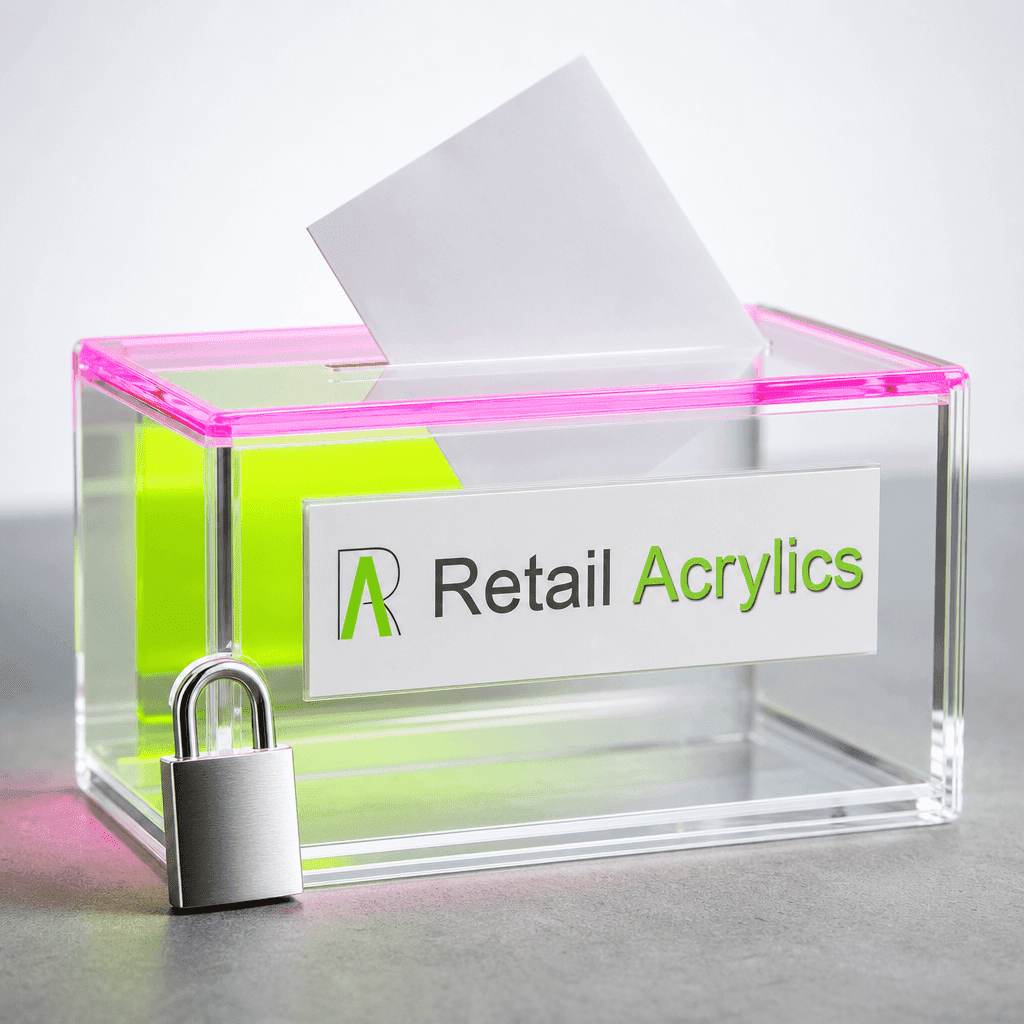
The key is presentation. A clear acrylic suggestion box placed near a checkout or reception area looks professional and unobtrusive. It signals that feedback is welcome without being pushy. Our 30cm Lockable Clear Acrylic Suggestion Box is a practical choice here; it keeps submissions secure, prevents tampering, and is compact enough to sit neatly on a counter without taking up unnecessary space.
The lockable feature matters more than it might seem. When customers see a secure box, they're more likely to trust that their feedback is being taken seriously and kept private rather than read by whoever happens to be standing nearby.
Structuring Your Feedback Collection
Collecting suggestions without any structure leads to a pile of vague comments that are difficult to act on. Before you place a box anywhere, decide what you actually want to learn.
Some useful approaches:
Keep the prompt simple. A single open question works better than a lengthy form. "What's one thing we could do better?" gives people a clear invitation without overwhelming them.
Set a review cadence. Commit to reviewing submissions on a fixed schedule, whether that's weekly or fortnightly. Letting responses accumulate for months means you lose the context of when and why feedback was given.
Categorise what comes in. Once you have a batch of responses, group them by theme. Pricing, staff behaviour, product range, environment, speed of service. Patterns become obvious quickly when you categorise rather than read each response in isolation.
Track changes over time. If you make a change based on feedback, note it. Then watch whether similar comments continue to appear. If they do, the change didn't solve the underlying issue.
Turning Feedback into Practical Changes
The gap between collecting feedback and acting on it is where most businesses stall. A few principles help here.
Prioritise by frequency and impact. A single comment about the lighting in your showroom is a data point. Ten comments about it over two months is a signal. Focus first on the feedback that appears repeatedly and relates directly to customer experience or operational efficiency.
Separate quick wins from longer projects. Some feedback will point to things you can fix this week. Others will require investment or process changes that take longer. Separate these into two lists and work through both simultaneously rather than letting the bigger items block progress on the smaller ones.
Close the loop where possible. If you make a change based on customer or staff feedback, say so. A small sign near your suggestion box that reads "You asked, we listened" with a brief summary of what changed builds genuine trust. It also encourages more people to submit feedback because they can see it leads to real outcomes.
The Workspace Angle: Feedback from Staff
Suggestion boxes aren't only useful for customer-facing environments. In office settings, they give staff a low-pressure way to raise concerns or ideas that they might not feel comfortable voicing directly. This is particularly relevant in open-plan workspaces where privacy is limited.
A well-placed box in a staff area, paired with a clear commitment from management to review and respond to submissions, can surface operational inefficiencies that would otherwise go unnoticed for months. Staff tend to notice friction in day-to-day processes that management doesn't see, and a simple feedback mechanism is often all that's needed to bring those issues forward.
If your office environment also involves workspace division or protective screening, those physical arrangements can themselves become a source of feedback. Are dividers positioned in a way that makes communication awkward? Is the layout creating noise issues? Our range of acrylic office divider screens and desk partitions is available in several configurations, including L-shaped dividers and cross dividers, giving you the flexibility to adjust layouts based on what your team actually tells you.
Making Feedback Systems Part of Your Operations
The businesses that get the most value from feedback collection treat it as an ongoing operational process rather than a one-off exercise. That means:
- Reviewing submissions on a fixed schedule, without exception
- Assigning someone specific to own the process
- Recording what feedback was received, what action was taken, and what the outcome was
- Revisiting the collection method itself periodically to see whether it's still working
A physical suggestion box is a simple starting point, but the system around it determines whether it produces any value. The box is just the mechanism. The process is what turns customer and staff opinions into genuine improvements.
If you're looking for a professional, durable option that fits neatly into a retail or office environment, browse our full range of acrylic display and collection products at Retail Acrylics. We manufacture in the UK, hold comprehensive stock with no minimum order requirements, and offer free delivery on orders over £150.